
A Twin Cities Doula’s Perspective on The Mother Baby Center
Choosing where to have your baby involves more than comparing amenities. You want to know what the place feels like, how your team might support you, and whether the setting fits your preferences and care needs.
Abbott Northwestern has a somewhat busier feel in my experience, along with nurses who are generally supportive of physiological birth. Providers I enjoy working with there include the Allina midwives, Dr. Hawes-Van Pelt, and Dr. Myhre at Women’s Health Consultants.
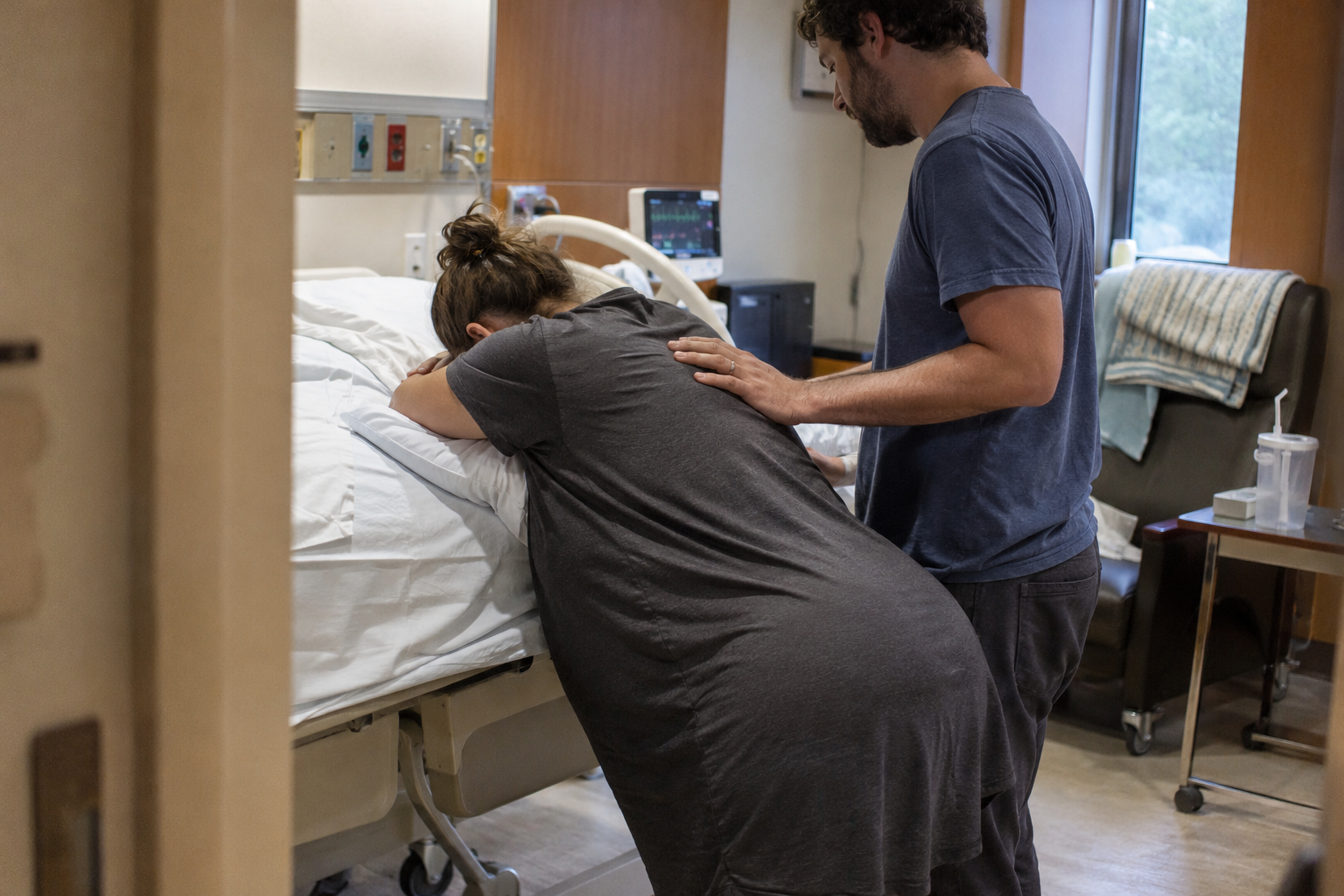
Birth care takes place at The Mother Baby Center at Abbott Northwestern and Children’s Minnesota. Despite the name, this is a hospital birth setting rather than a freestanding birth center.
Here is what I share with families based on my experience supporting births there, alongside practical information from the hospital. Individual experiences vary by provider, nurse, shift, and medical needs.
The Overall Vibe: A Busier Hospital Setting
Abbott feels a little busier to me than some other Twin Cities birth locations. The rooms I’ve worked in feel small to medium in size.
For families who like a more intimate room, that may feel comfortable. If you picture spreading out with several support people and a suitcase that could reasonably qualify as a second passenger, it helps to see the space ahead of time.
I recommend taking a tour and thinking about how you might use the room: where your partner can rest, where you can move, and what belongings you actually want within reach.
Support for Physiological Birth and Informed Choices
In my experience, Abbott’s nurses are generally supportive of physiological birth—working with the body’s labor process when the clinical situation allows.
A hospital with access to specialty care can still be a place to discuss movement, comfort measures, and your preferences for labor. Talk with your provider about what those choices could look like for your particular pregnancy.
Helpful questions include:
How do you support movement and different positions during labor?
How do you explain recommendations and alternatives?
What might change my options for monitoring or using water?
How do you support positioning and rest if I choose an epidural?
If I’m planning a VBAC, what is your approach?
You deserve clear explanations and opportunities to participate in decisions, including when your birth needs medical support.
Providers I Enjoy Working With
My favorite providers to work with at Abbott include the Allina midwives, along with Dr. Hawes-Van Pelt and Dr. Myhre at Women’s Health Consultants. These recommendations come from my firsthand experience supporting families as a doula.
Your provider’s approach is a meaningful part of how birth feels. Ask about their philosophy, who covers births when they are unavailable, and how they collaborate with other specialists if your care needs change.
For a pregnancy that requires specialty care, ask which team will manage your pregnancy and birth, and whether midwifery involvement is appropriate.
Doulas and Cesarean Support
In my experience at Abbott, doulas have been allowed into the operating room during spinal placement and for cesarean birth.
Having familiar support during those moments can be reassuring, whether a cesarean is planned or becomes part of the birth along the way.
Discuss arrangements for both your partner and doula during pregnancy. Access depends on the clinical situation and the surgical and anesthesia teams, especially during an emergency. My experience describes what I have seen; it is not a guarantee of access at every birth.
Birth Balls, Peanut Balls, and Wireless Monitors
I’ve seen birth balls, peanut balls, and wireless monitors available at Abbott.
Those options give your team tools to explore different ways for you to move, rest, and find support. Ask your nurse which equipment is available and appropriate for your care that day.
Wireless monitoring is something to discuss rather than assume. Your team can explain whether it fits your monitoring needs and how well it is working during labor.
Your doula and nurse can also help arrange the room so you can use the available space comfortably. You don’t have to arrive with a floor plan and a degree in furniture rearranging.
Showers, Tubs, and Water Birth
I’ve seen showers and tubs available, although the regular tubs I’ve encountered have felt fairly small. They have one room dedicated to waterbirth with a built in tub.
The Mother Baby Center lists water birth at its Minneapolis location for people who meet its criteria and complete the required consent forms.
Laboring in water and giving birth in water are separate options. Bring up both during pregnancy if they interest you.
Ask your provider:
Do you attend water births at Abbott?
What eligibility requirements apply?
What tub setup is currently used, and how is availability handled?
What circumstances could mean getting out of the water?
Read the hospital’s water birth information as a starting point for that conversation.
Specialty Care for More Complex Pregnancies
I consider Abbott an important hospital for families to explore when a pregnancy needs a higher level of care.
The Mother Baby Center brings together Allina Health’s maternal and fetal services with Children’s Minnesota’s neonatal and pediatric care. The Midwest Fetal Care Center also provides specialized care when a high-risk pregnancy involves a condition affecting the baby.
That connection can be especially relevant when prenatal testing identifies a need for coordinated planning before and after birth.
“High risk” covers many different situations. Ask your provider which location has the specific services you or your baby may need, who will attend the birth, and what care afterward could involve.
Learn more about mother and baby specialty care and the Midwest Fetal Care Center’s locations and services.
Parking and Arriving at Abbott
The Minneapolis campus can feel more intimidating to navigate than a smaller hospital, especially on a first visit. In my experience, connected parking has been helpful.
However, the Mother Baby Center’s arrival directions recommend the Blue/26th Street ramp and describe walking outside from that ramp to the birth-center entrance. Confirm your route rather than assuming the entire trip will be indoors.
The dedicated entrance is at 902 East 26th Street, Minneapolis, MN 55404. There is a drop-off area, which is worth knowing about before labor.
Review the current arrival directions and tour information. Ask about overnight entry, parking discounts for longer stays, and any construction affecting your route.
A practice trip is a perfectly reasonable part of birth preparation. Finding the entrance is easier when contractions aren’t participating in the navigation.
Food and Coffee for Parents and Support People
Food planning matters, especially when your stay extends beyond a quick afternoon.
Meals in Your Room
Abbott lists At Your Request room-service dining daily from 6:30 a.m. to 6:30 p.m.
Guests can also purchase meals delivered to the patient’s room. Check the current menu for ordering details and prices.
Discuss eating and drinking during labor or before a cesarean with your care team.
Meals and Coffee on Campus
Abbott’s dining guide lists a café and coffee shop in the Richard M. Schulze Surgical and Critical Care Center, along with Panera accessible from the main hospital side.
For another option, Midtown Global Market is listed one block south in the Midtown Exchange building, connected to the hospital by skyway.
The Mother Baby Center also lists Starz Café at Children’s Minnesota and Luna Coffee inside Marketplace. Ask staff which options are easiest to reach from your room.
Check Abbott’s dining guide and The Mother Baby Center’s campus information for current locations and hours.
Some campus pages list different dining arrangements, so staff can help confirm what is open that day.
Pack a Few Favorites
Bring familiar snacks for your support person and for yourself when appropriate for your care. Vending is available, but your favorite snack may be more appealing after a long night.
Hospital room service has closing hours. Babies do not.
Partner Comfort and Staying Overnight
The hospital lists a fold-out couch or recliner for a partner, plus a small refrigerator without a freezer.
Ask during your tour about overnight arrangements and where your support person can keep belongings. Given the room sizes I’ve experienced, packing thoughtfully can help the space feel easier to use.
Who Might Appreciate Giving Birth Here?
Abbott may be worth exploring if you want a hospital setting with access to specialty maternal and newborn services, or if you are interested in working with the Allina midwives or physicians at Women’s Health Consultants.
From my perspective, its strengths include generally supportive nurses, several comfort tools, water birth options for eligible patients, and the doula involvement I’ve experienced during cesarean care.
If a quieter atmosphere or a larger room is especially important to you, use a tour to help decide how the setting feels. Your preferences and medical needs both belong in the conversation.
Preparing for Your Hospital Birth
Knowing your hospital is helpful. Understanding labor, practicing comfort measures, and learning how to ask good questions can help you feel more prepared once you get there.
Through Confident Mama Birth Academy, I help parents and partners build practical skills for birth.
For personalized preparation and continuous support, explore my Twin Cities birth doula services. You can also learn about mentored doula support through the intern program.
You deserve a team that helps you understand your options and feel cared for throughout your birth.
Official Hospital Resources
The Mother Baby Center in Minneapolis: Directions, tours, and amenities
Midwest Fetal Care Center: Locations and contact information
Hospital information checked November 4, 2026. Firsthand impressions are Terri’s observations; services and availability may change.
About the Author
Terri Schelkoph, CD(DONA), HCHD, is the founder of Confident Mama and an experienced Twin Cities birth doula, childbirth educator, and birth coach. Since 2018, she has supported hundreds of families through pregnancy, labor, and birth. Terri is a Body Ready Method® Certified Professional, VBAC Link® Certified Doula, and Hypnobabies® Certified Hypno-Doula, with additional training through Spinning Babies®.
Through Confident Mama, Terri provides practical, evidence-informed childbirth education designed to help parents prepare with intention, understand their options, and approach birth feeling informed and confident.