
A common symptom that is worth talking about
Constipation may not be the pregnancy topic you bring up over coffee, but it can make your whole day uncomfortable. Hard stools, straining, bloating, and the feeling that you have not finished are all worth mentioning to your care team.
Pregnancy hormones slow the movement of food through the digestive tract. Iron supplements and some medicines can add to the problem. As pregnancy progresses, pressure from your growing uterus may contribute, too.
Start with food and fluids
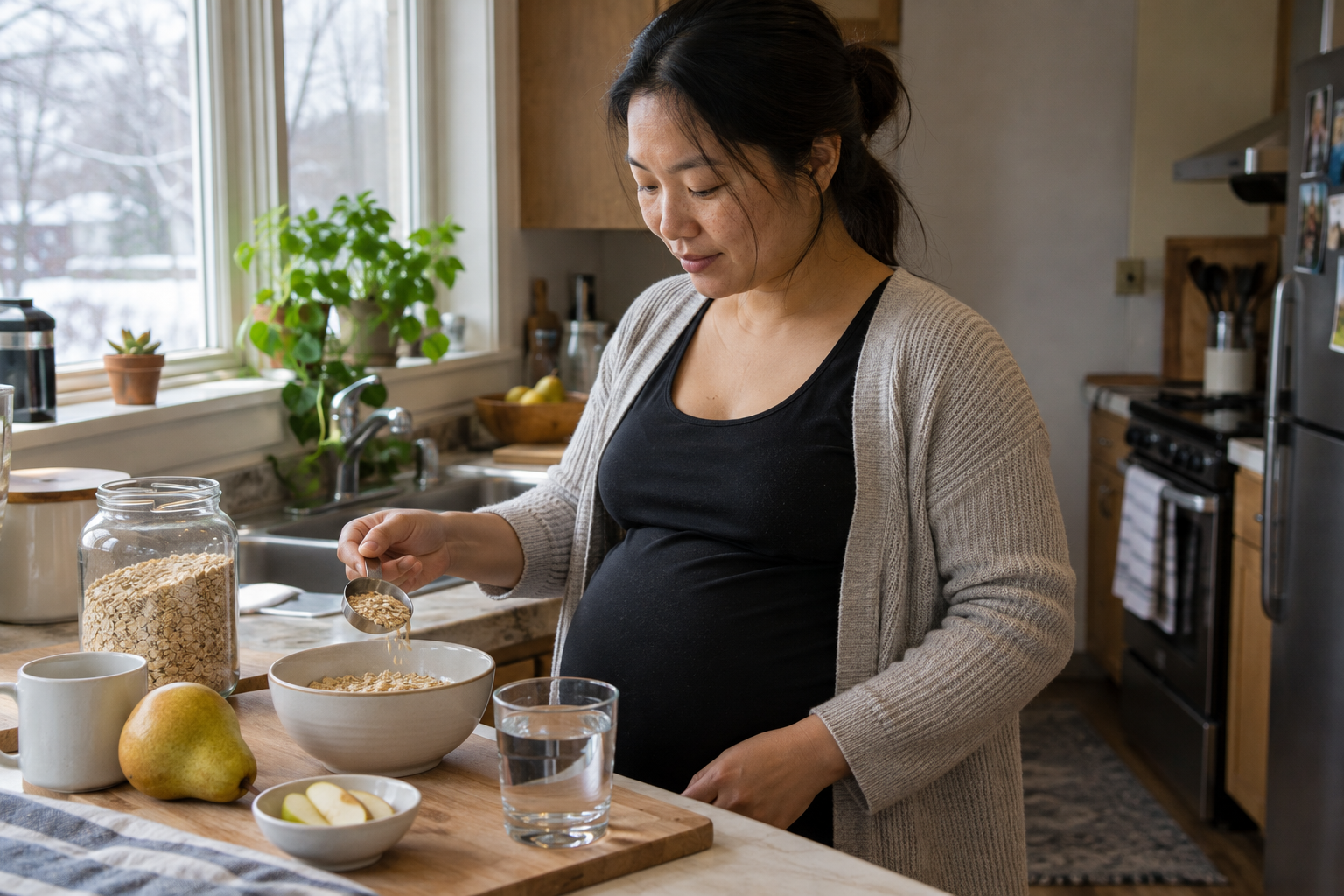
Add fiber gradually through foods you enjoy. Oatmeal, berries, pears, beans, lentils, whole grains, and prunes are useful options. A sudden jump from very little fiber to large amounts can leave you feeling more bloated, so give your body time to adjust.
Drink regularly throughout the day, particularly as you increase fiber. A water bottle within reach is often more useful than a good intention to drink later. If nausea limits what you can drink, ask your clinician for help with hydration as well as constipation.
A practical breakfast might be oatmeal with fruit, or whole-grain toast with nut butter and a pear. You do not need a complicated bowel routine or an expensive cleanse.
Give your body a little time and movement
If activity is appropriate for your pregnancy, gentle walking and regular movement may help. Respond when you feel the urge to go rather than postponing it until the end of the day.
Allow a few unhurried minutes after a meal. A small footstool may make the toilet position more comfortable by bringing your knees a little higher than your hips. Breathe normally, soften your belly, and avoid prolonged straining or holding your breath.
If you often feel blocked even when your stool is soft, mention that specifically. Bowel symptoms can sometimes involve how the pelvic floor muscles coordinate, and more fiber may not address the whole problem.
Review what you are taking
Iron can contribute to constipation, but stopping prescribed iron may leave anemia untreated. Ask whether another formulation, dose schedule, or constipation treatment would be appropriate. Include nausea medicine, antacids, and all supplements in that conversation.
Probiotics are often advertised for digestive health, but they are not a reliable solution for every case of pregnancy constipation. Magnesium products, herbal laxative teas, and detox products also deserve a safety check before use.
When food changes need some help
Persistent symptoms deserve a treatment plan. Your clinician or pharmacist may suggest a bulk-forming fiber product, such as psyllium, or an osmotic laxative, such as polyethylene glycol, which draws water into stool. Other medicines may be appropriate for short-term use depending on your situation.
Ask what to take, how long to use it, and when to follow up. Avoid repeatedly adding products on your own, particularly if you also have pain or vomiting. Castor oil is not an appropriate do-it-yourself treatment during pregnancy.
For ongoing difficulty relaxing or emptying, a pelvic health physical therapist may be helpful. Mom’s in Motion is one Twin Cities resource to explore; confirm the location, referral requirements, and insurance coverage directly.
When to get medical attention
Call promptly for severe or persistent abdominal pain, vomiting, significant rectal bleeding, or inability to pass gas, especially with increasing abdominal swelling. Check in about recurring blood with bowel movements rather than assuming it is always a hemorrhoid.
Pregnancy discomforts belong on your appointment list. My prenatal appointment guide can help you prepare, and my doula support includes helping you sort through questions to bring to your medical team.
This article offers general education. Your clinician can help identify the cause of constipation and recommend pregnancy-appropriate treatment.
Sources and further reading
Cleveland Clinic: Pregnancy constipation
MotherToBaby: Laxatives during pregnancy
UK Teratology Information Service: Treatment of constipation in pregnancy
HealthPartners and TRIA: Pelvic floor physical therapy
About the author
Terri Schelkoph is the owner of Confident Mama in Lakeville, Minnesota, a DONA-certified birth doula, childbirth educator, birth coach, and Body Ready Method® Pro. Since 2018, she has supported hundreds of families. She serves Minneapolis, St. Paul, and the surrounding Twin Cities, helping parents prepare with practical tools and greater confidence. Learn about Terri's doula support.