
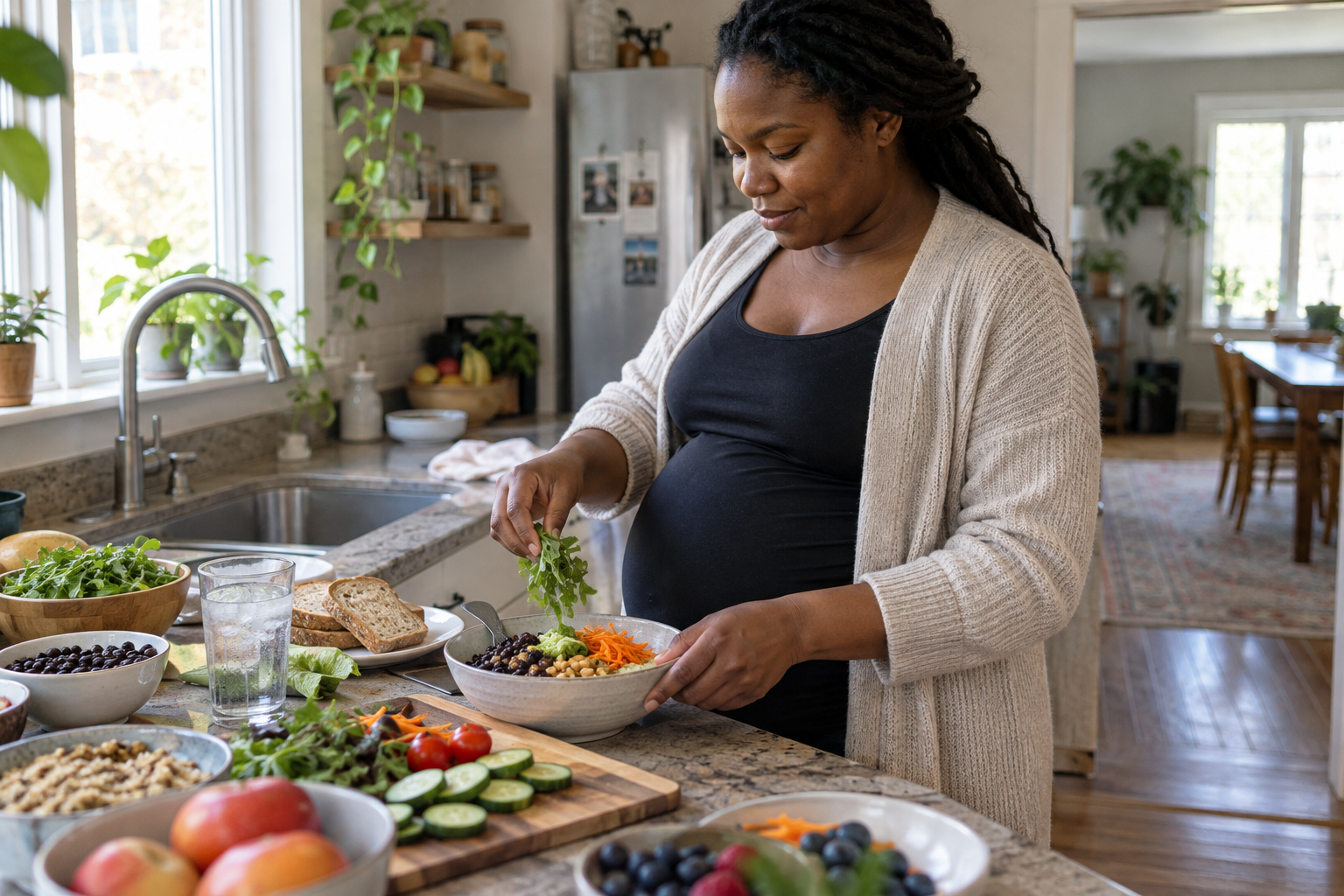
Pregnancy nutrition can fit real life
Between food aversions, a busy schedule, and advice from just about everyone, figuring out what to eat during pregnancy can feel like another job. It helps to have a few reliable habits you can return to, without turning every grocery trip into a research project.
Food provides the foundation. A prenatal vitamin helps fill certain gaps, and individualized medical guidance becomes important when symptoms, a health condition, or a deficiency changes what you need.
Build meals around familiar foods
When you can, include a protein food, a source of carbohydrate, and some produce. Add fats that help the meal feel satisfying. That might be eggs with toast and fruit, a bean-and-rice bowl with avocado, or chicken soup with vegetables and bread.
You do not need specialty pregnancy foods. Frozen vegetables, canned beans, oatmeal, and pasteurized yogurt can all belong in a practical plan. If nausea makes a full meal impossible, smaller portions and snacks are a reasonable place to start.
Variety helps cover different needs. Meat, beans, and lentils provide iron; eggs and soy foods offer choline; dairy or fortified alternatives can contribute calcium. Pairing plant sources of iron with vitamin C, such as beans with bell peppers, can help your body absorb that iron.
Fish can also be part of pregnancy nutrition. FDA and EPA guidance recommends 8–12 ounces weekly of a variety of lower-mercury fish. Use their fish-choice chart rather than assuming all fish need to be avoided. If your family eats locally caught Minnesota fish, check the Minnesota fish consumption guidance for that waterbody and species.
Food safety without unnecessary fear
Pregnancy makes some foodborne infections more concerning. A few preparation habits reduce risk:
Wash produce and keep raw meat separate from foods you will eat without cooking.
Cook meat, seafood, and eggs adequately; choose pasteurized dairy products.
Reheat deli meats and hot dogs until steaming hot.
Follow current food-safety guidance for refrigerated ready-to-eat foods and queso fresco-type cheeses, which can carry risk even when made with pasteurized milk.
If you ate something before learning a recommendation, contact your clinician if you become ill or the product is recalled. One meal does not tell you whether an infection occurred.
Avoid alcohol during pregnancy. Keep total caffeine below 200 milligrams a day unless your clinician recommends otherwise. Coffee-shop servings vary considerably, so check the actual drink rather than counting cups.
Where supplements fit
A prenatal vitamin supports nutrition alongside food. Bring the label to an appointment, especially if you also take individual vitamins, powders, herbal products, or an additional multivitamin.
Ask whether your prenatal includes folic acid, iron, and iodine, and whether your usual meals provide enough choline and calcium. Taking more of a nutrient is not automatically helpful. Herbal blends and products advertised as natural still need a safety review during pregnancy.
If you eat a vegan diet, have food allergies, have had bariatric surgery, or struggle to keep food down, ask for advice tailored to your situation. A registered dietitian can help make a workable plan. Lab-confirmed deficiencies may need prescribed treatment rather than food changes alone.
Nutrition support in Minnesota
Minnesota WIC offers eligible families nutrition education, food benefits, and referrals. You can apply during pregnancy. Your prenatal clinic can also help you find a registered dietitian and check insurance coverage.
Bring nutrition questions to your visits; my prenatal appointment timeline can help you prepare. When you are ready to focus on labor preparation, Confident Mama Birth Academy offers another place to learn and ask questions.
This article offers general education. A prenatal clinician or registered dietitian can help you meet your individual nutrition needs.
Sources and further reading
FDA and EPA: Advice about eating fish
CDC: Safer food choices during pregnancy
ACOG: Caffeine during pregnancy
NIH Office of Dietary Supplements: Pregnancy
About the author
Terri Schelkoph is the owner of Confident Mama in Lakeville, Minnesota, a DONA-certified birth doula, childbirth educator, birth coach, and Body Ready Method® Pro. Since 2018, she has supported more than 350 families. She serves Minneapolis, St. Paul, and the surrounding Twin Cities, helping parents prepare with practical tools and greater confidence. Learn about Terri's doula support.