
Waterbirth: Benefits, Risks, and What to Know Before You Get in the Tub
Waterbirth: Benefits, Risks, and What to Know Before You Get in the Tub
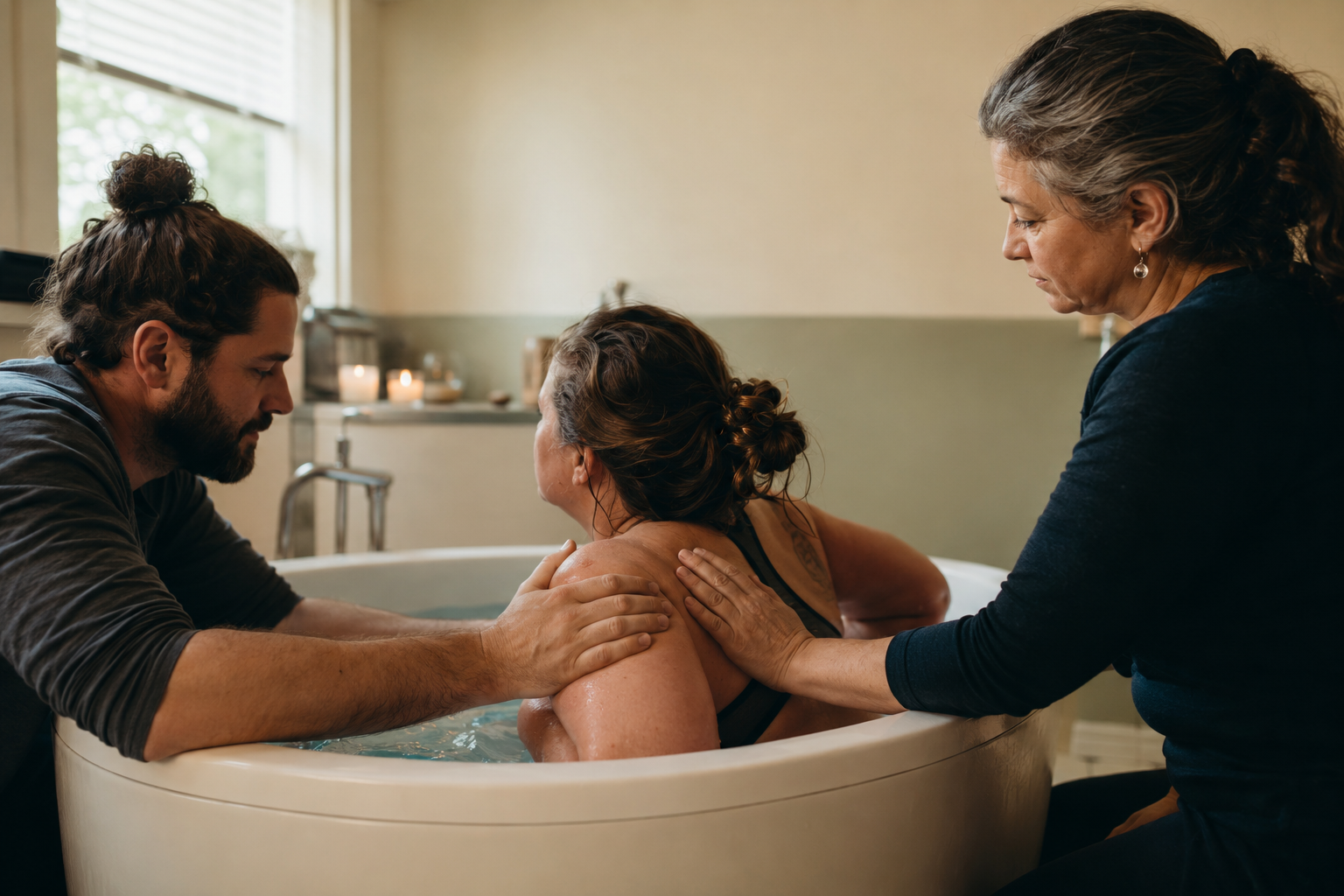
Warm water has a way of making clenched shoulders drop, tired muscles soften, and an intense labor feel a little more manageable. This is why many people are interested in waterbirth. But “using water in labor” can mean two different things, and understanding the difference is the best place to begin.
Laboring in water vs. giving birth in water
Water immersion during labor means spending part of labor in a tub, then getting out before the baby is born. Waterbirth means the baby is actually born underwater and then gently brought to the surface.
The distinction matters because professional guidance is not identical for both. Evidence supporting immersion during the first stage of labor is broader and more settled. Research suggests it may reduce the use of epidural or spinal pain relief without clearly increasing major complications for healthy, low-risk pregnancies. Evidence about birth underwater is more debated. Midwifery organizations support it for appropriately screened clients with trained attendants and clear safety protocols, while ACOG recommends that birth itself occur on land because rare but serious newborn complications have been reported.
In other words: the tub is not automatically reckless, and it is not automatically right for everyone. Welcome to maternity care, where the honest answer is often, “Let’s look at your individual situation.”
Benefits
People who labor in water often describe:
Greater relaxation and privacy
Easier position changes because of buoyancy
Less pressure on joints and tired muscles
A lower desire for pharmacologic pain relief
A calmer, more intimate environment
A stronger sense of control
For some, the tub becomes the “reset button” that helps them release tension and work with contractions. It does not make labor sensation-free—sadly, no one has yet invented the hot tub that does your contractions for you—but it can change how those sensations feel.
Possible risks
Potential concerns include maternal overheating, infection if sanitation protocols are poor, difficulty responding quickly to an emergency, and newborn complications such as water aspiration, infection, or umbilical-cord injury as the baby is lifted from the water. These events appear uncommon in well-screened births with trained teams, but uncommon does not mean impossible.
That is why safe waterbirth programs establish rules for water temperature, tub cleaning, fetal monitoring, maternal vital signs, when to enter the tub, how the baby is brought to the surface, and when everyone needs to get out.
Who may be eligible?
Criteria vary. Waterbirth is usually limited to healthy, term pregnancies with a single baby in a head-down position and reassuring maternal and fetal status. A provider or facility may recommend leaving the tub because of fever, significant bleeding, concerning fetal heart rate changes, thick meconium, excessive sleepiness from medication, mobility concerns, or another developing complication.
Some locations allow waterbirth with Group B Strep when antibiotics and other criteria are addressed; others do not. Policies for ruptured membranes, induction, VBAC, twins, and higher BMI also vary.
Use your B.R.A.I.N.
Benefits: What might water offer in my specific labor?
Risks: What concerns apply to me or my baby?
Alternatives: Can I labor in the tub and get out for birth? Is a shower available?
Intuition: What feels most supportive after I understand the facts?
Nothing/Next: Do we need to decide now? What would make the recommendation change?
Questions to ask
Do you support both laboring in water and birth underwater?
What makes someone eligible or ineligible?
How often do you personally attend waterbirths?
How are the water temperature, maternal vital signs, and fetal heart rate monitored?
What situations require leaving the tub?
Is the tub always available, and who fills and cleans it?
How do you respond to an emergency?
Waterbirth can be a meaningful preference without becoming the sole definition of success. You may plan to birth in the tub and discover that you want out. You may plan to use it only for comfort and decide—with your care team—that staying feels right. The goal is not to remain loyal to a piece of plumbing. The goal is a supported, informed, safe birth.
About the Author
Terri Schelkoph, CD(DONA), HCHD, is the founder of Confident Mama and an experienced Twin Cities birth doula, childbirth educator, and birth coach. Since 2018, she has supported more than 300 families through pregnancy, labor, and birth. Terri is a Body Ready Method® Certified Professional, VBAC Link® Certified Doula, and Hypnobabies® Certified Hypno-Doula, with additional training through Spinning Babies®.
Through Confident Mama, Terri provides practical, evidence-informed childbirth education designed to help parents prepare with intention, understand their options, and approach birth feeling informed and confident.
Explore Resources:
Creating a Birth Plan That Works
B.R.A.I.N. Decision-Making Guide.
Trusted resources:
ACOG: Immersion in Water During Labor and Delivery;