
The Ultimate Guide to Packing Your Hospital Bag
Everything you actually need (and what you can happily leave at home)
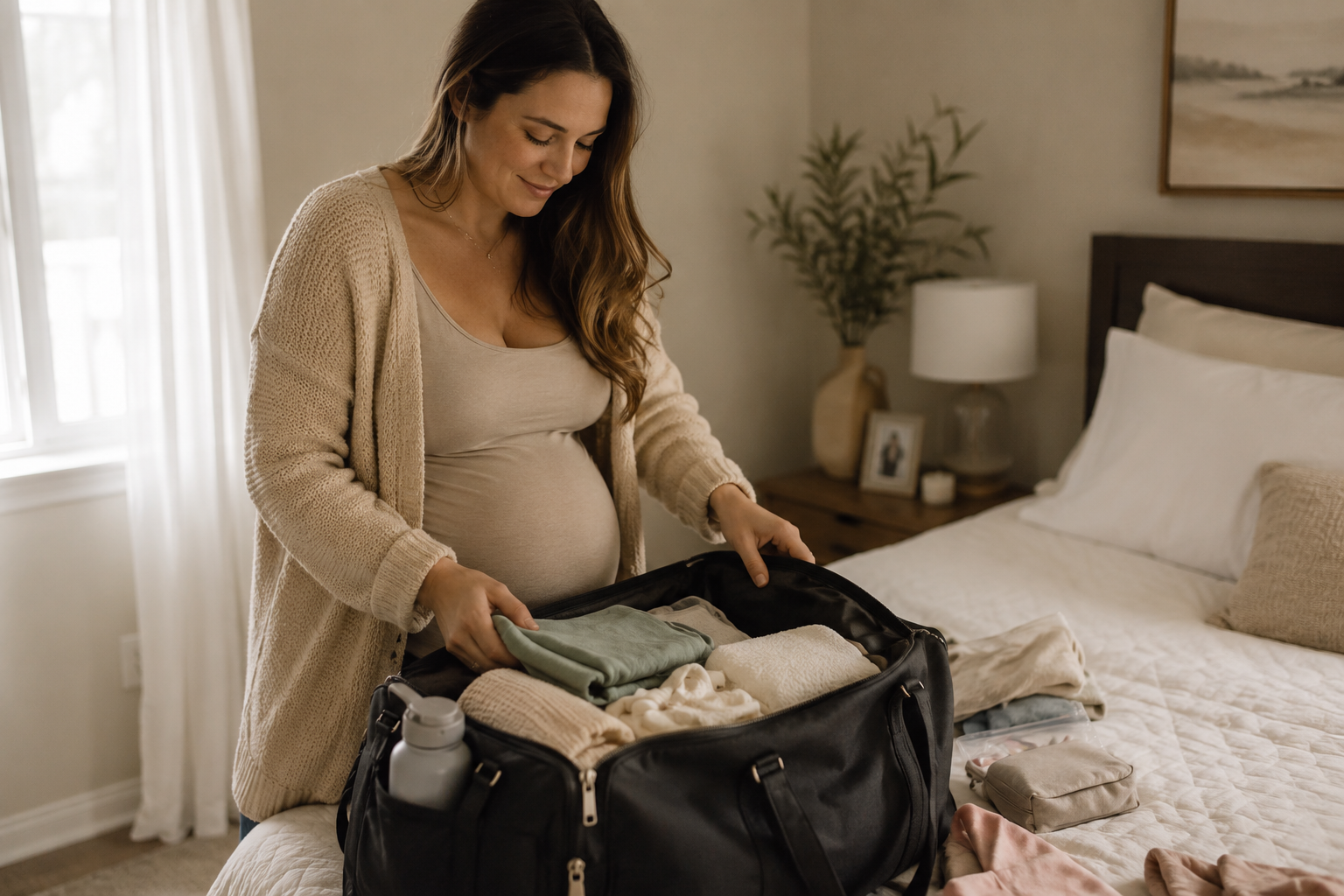
If you've ever searched "What should I pack for the hospital?" you've probably found lists that recommend bringing everything except your kitchen sink.
Three robes.
Five outfits.
Battery-powered candles.
A diffuser.
Your favorite mug.
A slow cooker
Okay... maybe not the slow cooker. Although, full disclosure—I did have one client bring a slow cooker when she came in for an induction, and honestly? It worked out surprisingly well. Nothing says "we're here for a while" quite like homemade soup.
After attending hundreds of births throughout the Twin Cities, I can tell you that most parents either:
dramatically overpack, or
show up with almost nothing.
The sweet spot is somewhere in the middle.
The goal isn't to prepare for every possible scenario. It's to make labor more comfortable while bringing the things that will actually make you feel like yourself.
Let's build a hospital bag that's practical, intentional, and doesn't require two luggage carts.
When Should You Pack Your Hospital Bag?
I usually recommend having your bag mostly packed by 34–36 weeks.
Could your baby wait until 41 weeks?
Absolutely.
Could they decide next Tuesday sounds fun?
Also yes.
Packing ahead of time means one less thing to think about if labor starts unexpectedly—or if your provider recommends an induction.
If you're planning an induction or cesarean birth, you'll be especially glad it's already done.
Download Your Free Hospital Bag Checklist
I've created a printable checklist that you can keep on your phone or print off as you're packing.
👉 Download the Free Hospital Bag Checklist
What to Pack for Mom
You're doing the hard work here, so let's start with you.
Comfortable Clothing
You won't need a fashion show.
Think soft, loose, and comfortable.
Bring:
Robe
Going-home outfit
Loose pajamas or nightgown
Slippers
Shower shoes
Cozy socks
Sweater or light layers (hospital temperatures have a personality of their own.)
Should You Bring Your Own Labor Gown?
This one is completely personal, but many moms love bringing their own labor gown. One benefit is that wearing your own clothing can help you feel less like a patient and more like yourself. It may sound like a small thing, but what we wear can influence how we feel. When you're in your own gown instead of a standard hospital gown, it can be easier to remember that you're an active participant in your birth—not just someone things are happening to. Many women tell me it helps them feel more confident asking questions, making decisions, and staying connected to their birth preferences.
The biggest downside? Birth is beautifully messy. Your gown may end up with amniotic fluid, blood, and all the evidence that a baby was born in it. If you're hoping to head home, crawl into your own bed, and forget about laundry for a few days, washing a labor gown might not be high on your list of priorities. If you do bring one, choose something comfortable, easy to wash, and don't bring anything you'd be heartbroken if it didn't come home looking brand new.
If you choose to bring one, here is the one that my clients have enjoyed the most, comfortable and easy to do skin to skin. FRIDA LABOR GOWN
Comfort Items
Little comforts make a surprisingly big difference.
Consider packing:
Pillow with a colorful pillowcase (so it doesn't disappear into the hospital bedding)
Favorite blanket if it helps you relax
Chapstick (seriously—don't skip this one)
Hair ties
Glasses and contact supplies
Toiletries
Most hospitals provide the basics...
…but there's something comforting about using your own shampoo after birth.
Bring:
Shampoo
Conditioner
Body wash
Toothbrush
Toothpaste
Deodorant
Hairbrush
Makeup (if you enjoy it—not because you "should")
Labor Comfort Essentials
This is where your bag can really work for you.
Some of my favorite labor tools include:
Healthy snacks (Think Carbs and Protein, Oatmeal, Apple Sauce Pouches,
Electrolytes or coconut water
Rebozo
Massage oil
Handheld massager
Small fan my favorite one here: PORTABLE FAN (Bonus- it can be used on a stroller too!)
Aromatherapy (Especially a Lavender for Relaxation, and Peppermint for Nausea, and Cleary Sage to help encourage contractions)
Birth affirmations
Your favorite playlist
Hypnobirthing app
Comfort measures cheat sheet
Many hospitals provide wonderful care—but they don't know your favorite music or the snack that always sounds good after a long day.
Bring the things that help you feel calm.
What Should Your Partner Pack?
Labor can last a few hours...
Or a couple of days.
Partners often forget they're humans too.
I recommend packing:
Comfortable clothes
Pajamas
Toiletries
Phone charger
Snacks
Refillable water bottle
Swim trunks if planning to support you in the shower or tub
A comfortable partner is usually a much more helpful partner.
What to Pack for Baby
The good news?
Babies don't actually need very much.
Bring:
Two or three outfits
Hats
Car seat
Diaper bag
Baby book (optional)
Receiving blanket
Footprint keepsake if you'd like one
Most hospitals provide:
Diapers
Wipes
Swaddles
Basic baby supplies
No need to pack an entire nursery.
Don't Forget Your Birth Preferences
This might be the most important thing in your hospital bag.
A birth preferences sheet helps your care team quickly understand what matters most to you—from communication preferences to delayed cord clamping to newborn procedures.
It doesn't guarantee birth will unfold exactly as planned.
It helps everyone begin on the same page.
I recommend printing several copies and placing one next to the whiteboard in your labor room.
Free Birth Preferences Templates
I've created two editable Canva templates you can personalize in just a few minutes.
Vaginal Birth Preferences Template
https://canva.link/65i5oj8229rz3zb
Cesarean Birth Preferences Template
https://canva.link/hoxtn53s1m6dpvk
For help thinking through your preferences, be sure to read:
→ How to Create a Birth Plan That Actually Works
What NOT to Pack
A few things can stay home.
Too many baby clothes
Jewelry
Large amounts of cash
Expensive valuables
Every breastfeeding gadget you've ever received at your baby shower
Your room is probably smaller than you imagine.
Keep it simple.
Frequently Asked Questions
Do hospitals provide diapers and wipes?
Yes. Most hospitals provide diapers, wipes, blankets, postpartum pads, mesh underwear, peri bottles, and many basic supplies for both mom and baby.
Do I need to bring my own pillow?
I highly recommend it.
Hospital pillows aren't exactly famous for luxury.
A pillow from home—with a bright pillowcase so it doesn't accidentally stay behind—can make resting much more comfortable.
Should I bring snacks?
Absolutely.
Labor is hard work.
Many partners get hungry, and once you're cleared to eat after birth, you'll probably be thankful you packed your favorite snacks.
Should I pack breastfeeding supplies?
Most hospitals provide basic breastfeeding support.
If you already own a breastfeeding pillow and know you love using it, it can be worth bringing for comfort.
When should I pack my hospital bag?
Around 34–36 weeks is ideal.
If you're planning an induction or scheduled cesarean, have everything ready a few days before your admission.
Final Thoughts
Packing your hospital bag isn't about preparing for every possible situation.
It's about giving yourself a few familiar comforts during one of life's biggest days.
Whether your labor is quick or long, spontaneous or induced, vaginal birth or cesarean, the goal isn't perfection—it's feeling prepared enough that you can focus on meeting your baby.
And remember…
If you forget something, chances are your partner can make a quick trip home—or the hospital probably has it.
(Except maybe your favorite pillow. That one's worth remembering.)
Helpful Resources
📝 Free Birth Preferences Templates
Vaginal Birth Template: https://canva.link/65i5oj8229rz3zb
Cesarean Birth Template: https://canva.link/hoxtn53s1m6dpvk
About the Author
Terri Schelkoph, CD(DONA), HCHD, is the founder of Confident Mama and an experienced Twin Cities birth doula, childbirth educator, and birth coach. Since 2018, she has supported more than 350 families through pregnancy, labor, and birth. Terri is a Body Ready Method® Certified Professional, VBAC Link® Certified Doula, and Hypnobabies® Certified Hypno-Doula, with additional training through Spinning Babies®.
Through Confident Mama, Terri provides practical, evidence-informed childbirth education designed to help parents prepare with intention, understand their options, and approach birth feeling informed and confident.
📖 Related Articles