
The Complete Guide to Childbirth Education
Everything You Need to Know Before Your Baby's Birthday
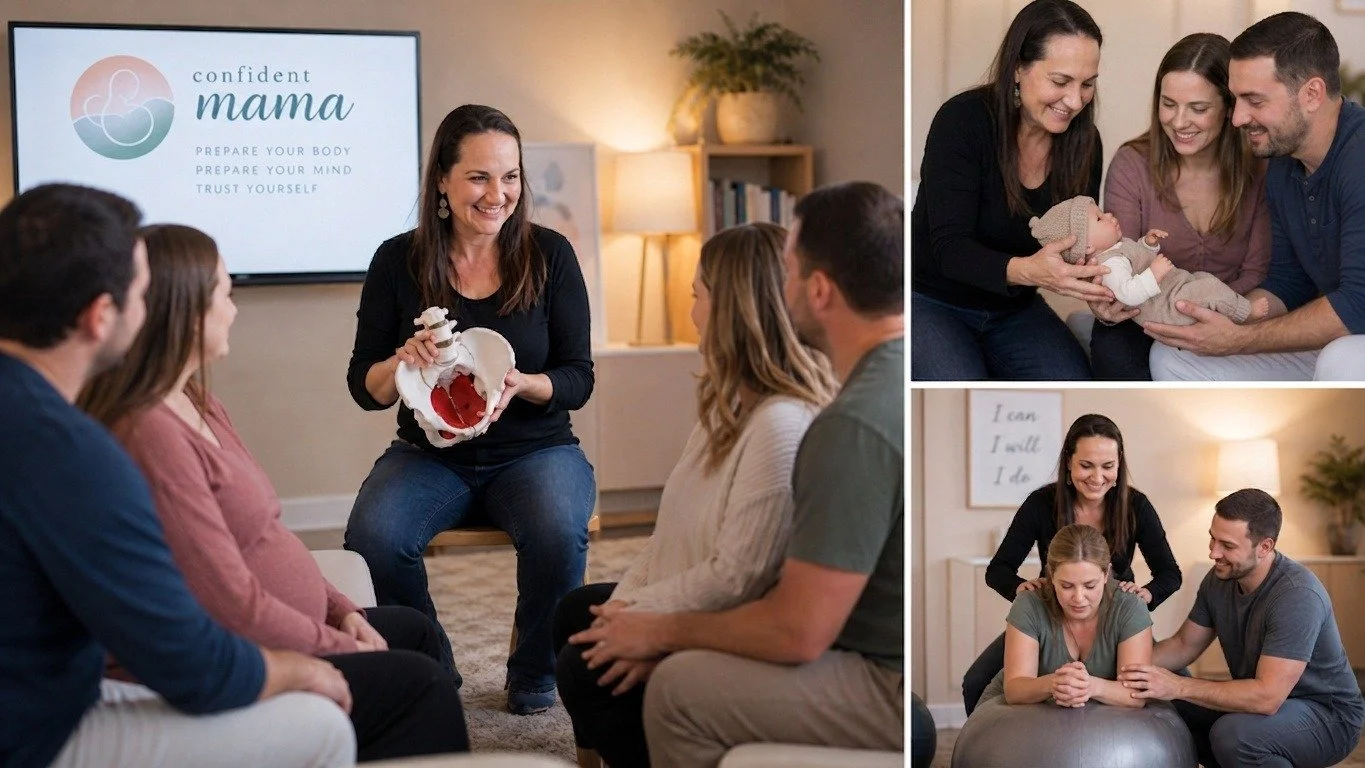
If you're expecting a baby, you've probably spent hours researching strollers, car seats, bassinets, and baby monitors.
But there's one thing that's much harder to put on a registry:
Confidence.
Birth isn't something you can completely predict, but it is something you can prepare for.
As a birth doula and childbirth educator who's supported more than 350 births throughout the Twin Cities, I've seen one truth over and over again:
The families who feel the most confident aren't the ones with the "perfect" birth plans.
They're the ones who understand what's happening, know their options, and feel prepared to make decisions when birth takes an unexpected turn.
That's exactly what childbirth education is designed to do.
Whether you're planning an unmedicated birth, hoping for an epidural, preparing for an induction, considering a VBAC, or simply wondering what labor actually feels like, this guide will walk you through everything you need to know.
What Is Childbirth Education?
Childbirth education is a structured way to prepare for pregnancy, labor, birth, postpartum recovery, and caring for your newborn.
A good birth class doesn't tell you what kind of birth you should have.
Instead, it helps you understand:
how labor works
what your body is doing
what your options are
common medical procedures
comfort measures
pain management choices
partner support
recovery after birth
newborn care basics
The goal isn't to create a "perfect birth."
The goal is to help you walk into birth feeling informed instead of overwhelmed.
Why Childbirth Education Matters
Many parents assume they'll just make decisions when they get to the hospital.
The reality?
Birth often moves quickly.
When your provider asks,
"Would you like to start Pitocin?"
or
"How do you feel about breaking your water?"
or
"Baby's heart rate is changing…"
...that probably isn't the first time you want to hear those words.
Childbirth education gives you a foundation before those conversations happen.
Instead of making decisions from fear, you can make them from understanding.
What You'll Learn in a Great Childbirth Class
Every class is different, but comprehensive childbirth education should cover far more than breathing techniques.
Understanding Labor
You'll learn:
how labor begins
signs labor is starting
stages of labor
what's happening during each stage
when to head to the hospital
what normal labor progression looks like
Understanding what's happening often makes labor feel much less intimidating.
Comfort Measures
Birth doesn't have to be something you simply endure.
You'll learn practical tools including:
movement
positioning
breathing
relaxation
massage
counter pressure
hydrotherapy
birth balls
peanut balls
rebozo techniques
partner support
These techniques can be incredibly helpful whether or not you choose an epidural.
Medical Interventions
One of the biggest goals of childbirth education is helping interventions feel less mysterious.
You'll learn about:
inductions
cervical ripening
Bishop Score
Pitocin
breaking the water
epidurals
fetal monitoring
assisted delivery
cesarean birth
Knowing what these are—and why they might be recommended—helps you ask thoughtful questions in the moment.
👉 Read more:The Truth About Induction: What Every Twin Cities Mom Should Know.
Creating a Birth Plan
A birth plan isn't about controlling birth.
It's about communicating what matters most to you.
Maybe your priority is:
avoiding unnecessary interventions
immediate skin-to-skin
delayed cord clamping
freedom to move
low lighting
keeping your partner involved
Understanding why these preferences matter is even more important than simply writing them down.
👉 Read more:How to Create a Birth Plan That Works.
Decision-Making
One of my favorite things to teach is that birth isn't about memorizing facts.
It's about learning how to think through decisions.
Sometimes there isn't one perfect answer.
Often there are several reasonable options.
Learning how to weigh benefits, risks, alternatives, and your own values can help you feel confident no matter how birth unfolds.
Partner Preparation
Partners often wonder,
"What exactly am I supposed to do?"
A good childbirth class answers that.
Partners learn:
how labor progresses
comfort measures
advocacy
emotional support
communication
when to step in
how to remain calm
Birth is a team effort.
Postpartum Recovery
Birth is only one day.
Recovery lasts much longer.
Childbirth education should also prepare you for:
physical healing
feeding your baby
newborn sleep
emotional recovery
postpartum warning signs
realistic expectations for the first weeks
When Should You Take a Childbirth Class?
The sweet spot is usually between 28 and 34 weeks.
This gives you enough time to:
practice comfort measures
ask questions
prepare your birth plan
discuss options with your provider
Waiting until 37 or 38 weeks often means you're trying to cram everything in while simultaneously wondering if every cramp is labor.
👉 Read more:When Should You Take a Childbirth Class?
Can You Take an Online Childbirth Class?
Absolutely.
Online childbirth education has become one of my favorite ways to teach.
It allows families to:
learn at their own pace
revisit lessons
pause and take notes
watch together
fit learning into busy schedules
Many parents actually retain more because they aren't trying to absorb eight hours of information in one Saturday.
Should You Still Take a Class If You're Hiring a Doula?
Yes.
These two services complement each other beautifully.
Think of childbirth education as preparing before the big game.
A doula helps coach you during the game.
Your class gives you the knowledge.
Your doula helps you apply it.
👉 Learn more about Doula Services.
What If You've Already Had a Baby?
Every birth is different.
Many second- or third-time parents tell me they wish they'd taken a class before their first birth.
Subsequent pregnancies often bring new questions:
planning a VBAC
preparing for an induction
hoping for a different experience
involving older siblings
refreshing comfort techniques
Birth preparation is valuable every time.
Choosing the Right Childbirth Class
Not all classes are created equal.
Look for an educator who:
teaches evidence-based information
presents balanced options
encourages questions
respects different birth preferences
includes partners
prepares you for unexpected situations
offers practical comfort measures
The best class doesn't tell you what choices to make.
It helps you understand your choices.
Common Questions About Childbirth Education
Is childbirth education worth it?
For most families, yes. Understanding labor, birth, recovery, and your options often leads to greater confidence and less anxiety.
Do hospitals offer childbirth classes?
Many do. They can be a great introduction, but some focus primarily on hospital policies and procedures. Independent childbirth educators often have more flexibility to provide in-depth, evidence-based education and discuss a wider range of birth options.
Can I take childbirth classes online?
Absolutely. Online classes are convenient, self-paced, and easy to revisit whenever you need a refresher.
Will childbirth education guarantee the birth I want?
No class can promise a specific outcome. What it can do is prepare you to navigate whatever path your birth takes with more confidence and understanding.
Should my partner attend?
Yes. Birth partners often say they leave class feeling much more prepared to support labor and communicate with the care team.
Preparing for Birth Is One of the Best Gifts You Can Give Yourself
Your birth doesn't need to be perfect to be empowering.
It doesn't have to follow every line of your birth plan to be meaningful.
Preparation isn't about controlling every outcome—it's about walking into labor with confidence, understanding, and the ability to make informed decisions when they matter most.
I truly believe birth is beautifully designed, and while every story unfolds a little differently, every family deserves to feel supported, informed, and heard along the way.
If you're looking for childbirth education that is practical, evidence-based, encouraging, and designed for real life (because babies don't always follow the script), I'd love to help.
Ready to Prepare for Birth?
Whether you're in Minneapolis, St. Paul, or anywhere in the Twin Cities—or you're looking for flexible online learning—you'll find classes designed to help you feel calm, capable, and confident before labor begins.
👉Explore the Confident Mama Online Academy
👉 Learn about the Hybrid Childbirth Class
👉 Schedule a Birth Coaching Consultation
About the Author
Terri Schelkoph, CD(DONA), HCHD, is the founder of Confident Mama and an experienced Twin Cities birth doula, childbirth educator, and birth coach. Since 2018, she has supported more than 350 families through pregnancy, labor, and birth. Terri is a Body Ready Method® Certified Professional, VBAC Link® Certified Doula, and Hypnobabies® Certified Hypno-Doula, with additional training through Spinning Babies®.
Through Confident Mama, Terri provides practical, evidence-informed childbirth education designed to help parents prepare with intention, understand their options, and approach birth feeling informed and confident.
Related Resources
Continue learning with these helpful guides: