
Twin Cities Guide to Hiring a Doula
Everything Minneapolis & St. Paul Families Should Know Before Choosing Birth Support
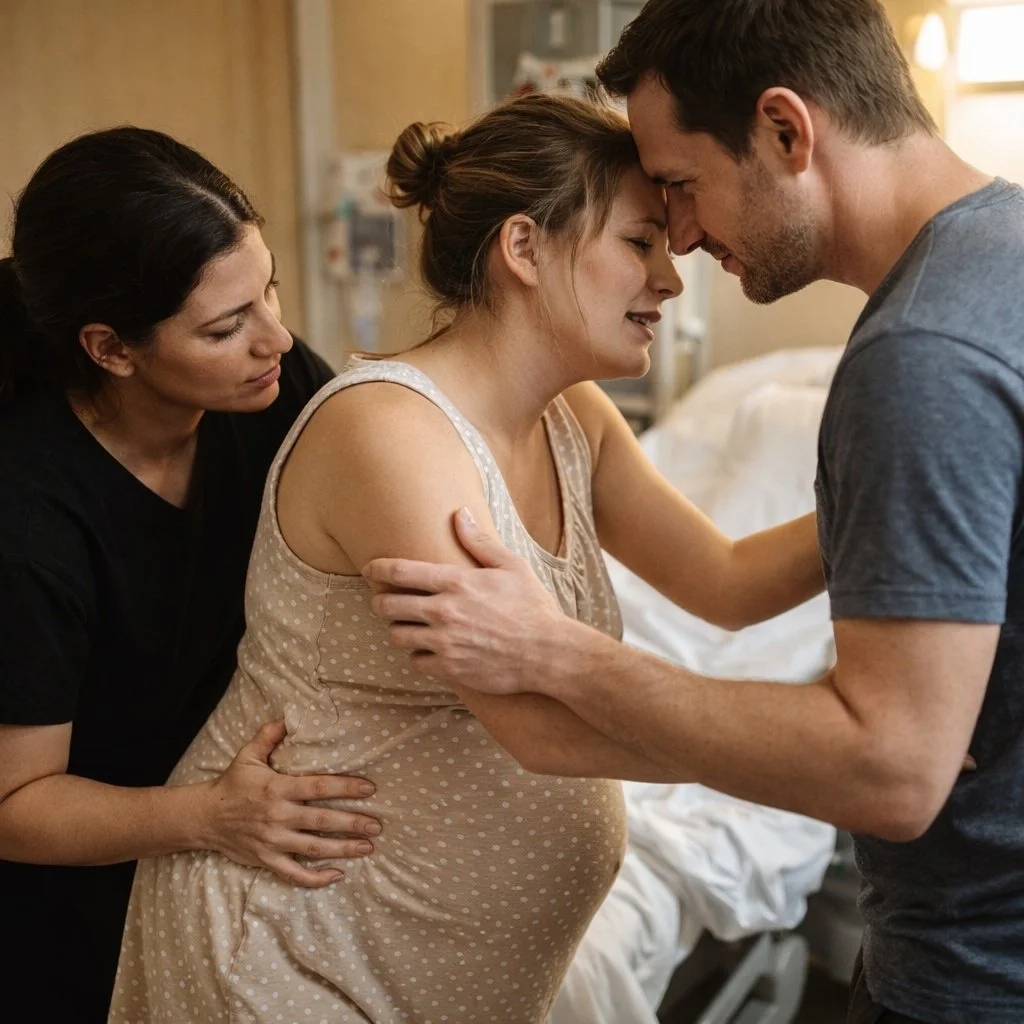
If you're expecting a baby in the Twin Cities, you've probably heard someone say:
“You should get a doula.
"
Maybe your friend had one.
Maybe your midwife recommen
ded one.
Maybe you've seen the word on Instagram a hundred times but still aren't exactly sure what a doula actually does.
You're not alone.
Hiring a doula is becoming increasingly common—and for good reason. Whether you're planning an unmedicated birth, hoping for an epidural, preparing for an induction, scheduling a cesarean, or simply wanting someone experienced by your side, a doula can make a meaningful difference.
As a Minneapolis-St. Paul birth doula who's supported more than 350 births throughout the Twin Cities, I've seen firsthand how the right support can help families feel calmer, more confident, and better prepared.
Here's everything you need to know before hiring a doula.
What Is a Birth Doula?
A birth doula is a trained professional who provides continuous emotional, physical, and informational support during pregnancy, labor, birth, and the immediate postpartum period.
Unlike your doctor or midwife, your doula doesn't provide medical care.
Instead, your doula focuses entirely on you.
That means helping you:
Understand your options
Prepare before labor begins
Stay calm during unexpected moments
Find comfortable labor positions
Support your partner
Communicate with your medical team
Feel informed throughout the birth process
Think of your provider as the expert in delivering babies.
Your doula is the expert in supporting laboring families.
The two work beautifully together.
Do Doulas Replace My Partner?
Absolutely not.
One of the biggest misconceptions about doulas is that they take over the partner's role.
The opposite is actually true.
A good doula helps your partner feel more confident.
Instead of wondering,
"What am I supposed to do?"
your partner has someone guiding them.
Your doula might suggest:
Different comfort techniques
Position changes
Massage or counterpressure
Ways to encourage you
When to offer food or water
When to simply sit quietly beside you
Many partners tell me afterward,
"I couldn't have done that without you."
Not because they weren't capable—but because birth is a lot to navigate when it's your favorite person doing the hard work.
What Does a Doula Actually Do During Labor?
Every birth looks different, but your doula may help by:
Before Labor
Creating a birth preferences plan
Preparing for hospital procedures
Practicing labor positions
Teaching comfort measures
Answering questions
Helping you know when labor is starting
During Early Labor
Many families text or call their doula long before heading to the hospital.
This support can help determine:
Is this really labor?
Should we stay home?
When should we leave?
What can help right now?
Sometimes reassurance is exactly what's needed.
Sometimes it's, "Go ahead and pack the car."
At the Hospital
Your doula helps create a calm environment while working alongside your nurses and provider.
Support often includes:
Breathing guidance
Position changes
Birth ball techniques
Peanut ball positioning
Counterpressure
Hip squeezes
Encouragement
Helping explain what's happening
Reminding you of your preferences
Supporting your partner
No matter how birth unfolds, your doula stays with you.
Can I Still Have a Doula If I Want an Epidural?
Absolutely.
Many people assume doulas are only for natural birth.
Not true.
Doulas support:
Epidural births
Inductions
Planned cesareans
Unplanned cesareans
VBACs
High-risk pregnancies
Medicated births
Unmedicated births
A doula isn't there to help you avoid medical interventions.
She's there to help you make informed decisions that align with your goals.
What Does the Research Say?
Research consistently shows that continuous labor support is associated with positive outcomes.
Studies have found that people with continuous support are more likely to:
Have a spontaneous vaginal birth
Feel more satisfied with their birth experience
Experience shorter labors
Need fewer interventions in some settings
While every birth is unique and no one can guarantee a specific outcome, having continuous support is one of the most evidence-based ways to improve the birth experience.
Questions to Ask When Interviewing a Doula
Not every doula is the right fit for every family.
Interviewing several doulas is a great idea.
Here are some questions to ask:
Experience
How many births have you attended?
What hospitals do you regularly work at?
Have you supported births similar to mine?
Philosophy
How do you support different birth preferences?
How do you work with doctors and nurses?
How do you support partners?
Logistics
When do you go on call?
Do you have a backup doula?
What's included in your package?
How many prenatal visits do we have?
Are postpartum visits included?
Comfort
Perhaps the most important question:
Do I feel comfortable with this person?
You're inviting someone into one of the biggest days of your life.
Credentials matter.
Experience matters.
But connection matters too.
What Does a Doula Cost in the Twin Cities?
Pricing varies depending on experience, services, and availability.
In the Minneapolis-St. Paul area, birth doula services commonly range from about $1,200 to $2,500 or more, with newer doulas or intern programs often offering lower-cost options.
Some insurance plans and employer benefits may reimburse doula care, and Minnesota families may also qualify for Medicaid coverage or community-based programs, depending on eligibility.
When comparing packages, don't focus only on price.
Ask what's included.
A more comprehensive package may offer:
Prenatal education
Birth planning
On-call support
Continuous labor support
Postpartum follow-up
Additional resources
How Early Should You Hire a Doula?
Earlier is usually better.
Many Twin Cities doulas book months in advance.
Ideally:
First trimester: Start researching
Second trimester: Schedule interviews
Around 20–30 weeks: Reserve your doula
If you're further along, don't panic.
It's always worth reaching out.
Sometimes availability opens unexpectedly.
Why Local Experience Matters
Every hospital has its own routines, culture, and policies.
A doula familiar with Twin Cities birth locations often understands the flow of care at area hospitals and birth centers, which can help families know what to expect.
Local experience also means your doula likely has established professional relationships with many nurses, midwives, physicians, chiropractors, pelvic floor therapists, lactation consultants, and other providers throughout the area.
Signs You've Found the Right Doula
The right doula probably won't promise you a perfect birth.
Instead, she'll help you feel:
Heard
Respected
Prepared
Supported
Calm
Confident
She'll answer your questions honestly.
She'll respect your choices.
She'll support your goals—even if they change.
Because birth isn't about following a perfect plan.
It's about feeling informed and cared for every step of the way.
Frequently Asked Questions
Are doulas worth it?
Many families say their doula was one of the most valuable investments they made during pregnancy because of the education, reassurance, and continuous support they received.
Can I hire a doula if I'm having a scheduled cesarean?
Yes. Doulas can provide support before surgery, during the birth when hospital policies allow, and during recovery and those first precious moments with your baby.
Do hospitals allow doulas?
Yes. Most Twin Cities hospitals welcome doulas as part of the birth team, though policies may vary.
Is a doula covered by insurance?
Some insurance plans, health savings accounts (HSAs), flexible spending accounts (FSAs), employer benefits, and Minnesota Medicaid programs may help cover doula services. Ask your doula what documentation they can provide.
Ready to Find the Right Birth Support?
Choosing a doula is about more than hiring someone to be present during labor.
It's about finding someone who will educate you, encourage you, and walk alongside you as you prepare to welcome your baby.
Whether your birth is straightforward or full of unexpected turns, having experienced, compassionate support can make all the difference.
If you're looking for a birth doula in Minneapolis, St. Paul, or the surrounding Twin Cities area, I'd love to connect.
Together, we can create a plan that helps you feel informed, confident, and supported—whatever your birth story looks like.
👉 Schedule a free consultation to see if we're the right fit.
About the Author
Terri Schelkoph, CD(DONA), HCHD, is the founder of Confident Mama and an experienced Twin Cities birth doula, childbirth educator, and birth coach. Since 2018, she has supported more than 350 families through pregnancy, labor, and birth. Terri is a Body Ready Method® Certified Professional, VBAC Link® Certified Doula, and Hypnobabies® Certified Hypno-Doula, with additional training through Spinning Babies®.
Through Confident Mama, Terri provides practical, evidence-informed childbirth education designed to help parents prepare with intention, understand their options, and approach birth feeling informed and confident.